White paper · public brief
Texas water independence starts with action we can see.
A secure water future is not a distant engineering problem. It is a public choice about how Texas grows, invests, and takes care of what it already has.
This page is a plain-language reading of the Texas Water Independence brief: the pressure is real, the tools are available, and the next step is turning a state plan into public action.
Executive summary
Texas can choose a water future that is resilient, local, and ready for growth.
Water is the foundation beneath every Texas future: a home, a farm, a business, a river, and a growing city all depend on it. But drought, population growth, aging infrastructure, and groundwater depletion are narrowing the room to wait.
The brief’s argument is straightforward. Texas already knows many of the projects and practices it needs. What is missing is consistent investment, stronger support for conservation and reuse, protection for the natural systems that hold water, and public accountability for results.
Water independence is therefore not isolation or a single megaproject. It is the ability to meet more of our needs with resilient local systems, wise use, protected sources, and decisions made for the long term.
Key findings
The numbers make delay harder to defend.
The brief points to two figures that frame the scale of the choice.

51.5M
Projected Texas population by 2070. Growth makes reliable planning more urgent.
$80B
Estimated investment needed to meet projected water needs in the 2022 State Water Plan.
Drought
Dry years reduce the margin for error and make every gap in the system more expensive. Preparing for drought has to happen before a crisis, not after one.
Growth
Texas is projected to reach 51.5 million people by 2070. Population growth means more homes, farms, businesses, and ecosystems depending on the same finite resource.
Aging systems
Water infrastructure is easy to overlook until it fails. Pipes, treatment, storage, and delivery systems need maintenance and long-term capital, not just emergency repair.
Groundwater depletion
Aquifers are local lifelines for people and agriculture. Protecting them means planning around recharge, demand, and the limits of what a place can sustainably provide.
Proposed initiatives
Build the system we want to depend on.
Each initiative reinforces the others: investment gives ideas a path, efficiency stretches supply, protection keeps sources healthy, and transparency keeps the work honest.
- 01
Fund the state water plan
Treat the projected $80 billion need identified in the 2022 State Water Plan as essential public infrastructure. Communities need a dependable path from a priority on paper to a project that can be built, maintained, and measured.
- 02
Make efficiency pay
Back conservation, leak reduction, reuse, and efficient agriculture as core supplies. The least expensive gallon to develop is often the one Texas keeps in the system.
- 03
Invest in local and regional resilience
Support the pipes, treatment, storage, local sources, and skilled operators that make water systems dependable in ordinary years and useful in dry ones.
- 04
Protect the sources
Keep groundwater, rivers, wetlands, and watersheds healthy enough to serve the communities, farms, and habitats that rely on them. A source that is depleted or degraded cannot be wished back into service.
- 05
Report progress in public
Set milestones Texans can understand, track whether investment delivers, and adjust course when the facts change. Transparency builds trust and improves the work.
How it reaches people
Water policy becomes real at the scale of a place.
Statewide leadership should make local resilience possible, not flatten the differences between regions.
At home
Reliable service and efficient use give families a safer, more predictable daily life.
On the farm
Healthy sources and smarter efficiency help agriculture remain productive through dry cycles.
In the city
Local and regional infrastructure gives communities room to grow without turning every shortage into a scramble.
Across the economy
Businesses can plan with more confidence when water is treated as essential public infrastructure.
Legislative asks
A clear request to Texas leaders.
The legislature can turn urgency into a durable program of work.
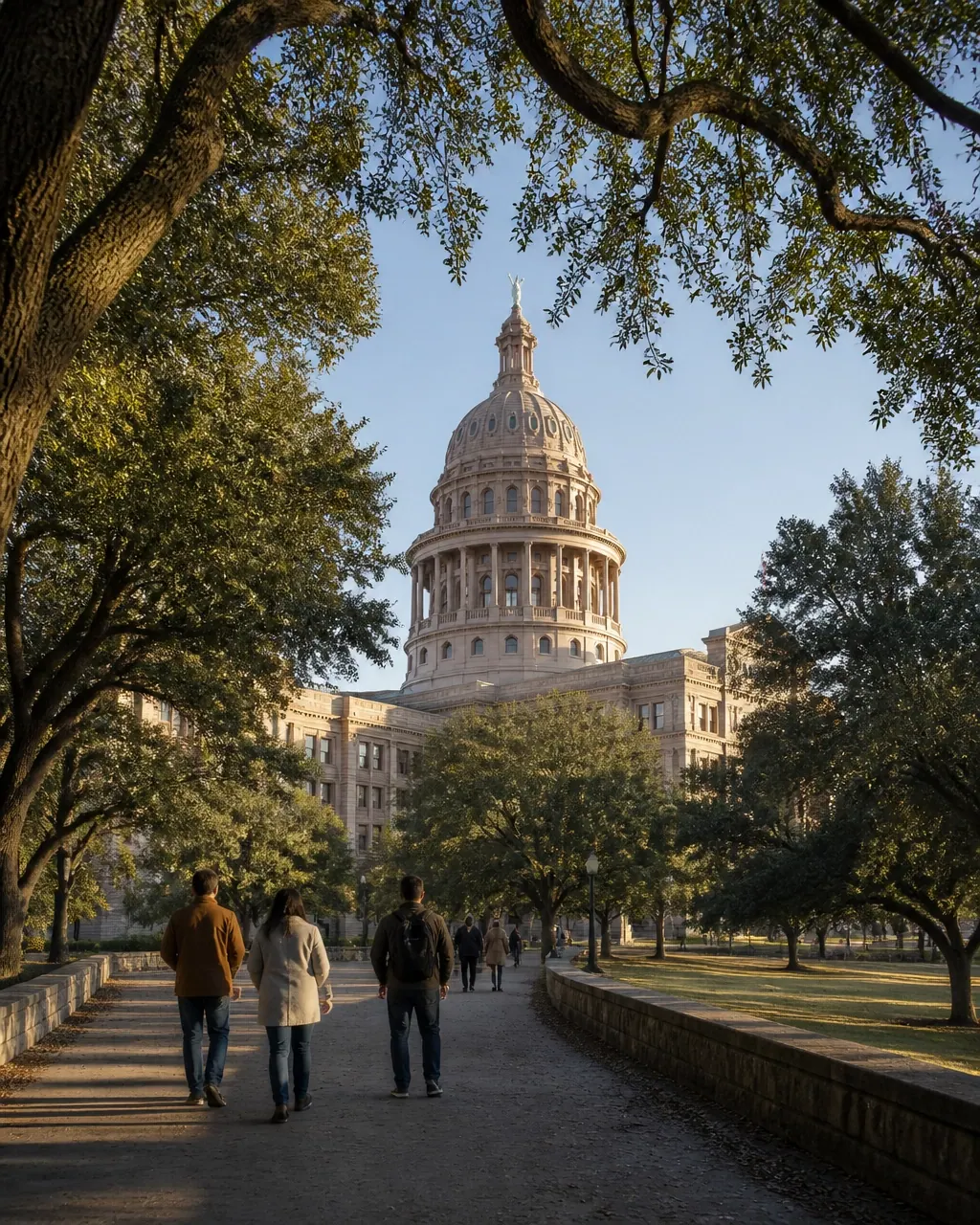
To the Texas Legislature:
We ask you to secure the future of Texas water security by acting before the next emergency.
- Fund the state water plan.Make the long-term investment needed for communities to meet projected demand.
- Reward conservation and reuse.Make efficiency, leak reduction, reuse, and efficient agriculture easier to finance and scale.
- Invest in resilient infrastructure.Support local and regional systems, storage, treatment, and the people who keep them working.
- Protect groundwater and watersheds.Treat the rivers, aquifers, wetlands, and landscapes that store and move water as part of the infrastructure.
- Measure and report progress.Publish milestones and results so Texans can see what is working and where the plan needs to change.
The tools exist. The responsibility is shared. The time to build is now.
Make the message public
Read it. Share it. Sign on.
The full source PDF is available to download. Then add your name to the public call for a durable Texas water future.